One thing I’ve learned from working across websites, email marketing, CRM systems, and automation is that businesses often treat each one as a separate project.
The website is handled by one person.
The CRM is set up by someone else.
Email marketing is managed separately.
Automation gets added later when the team starts doing too many things manually.
Each part might work on its own, but the customer journey can still feel disconnected.
That’s usually where I start asking more questions.
What happens after someone visits the website?
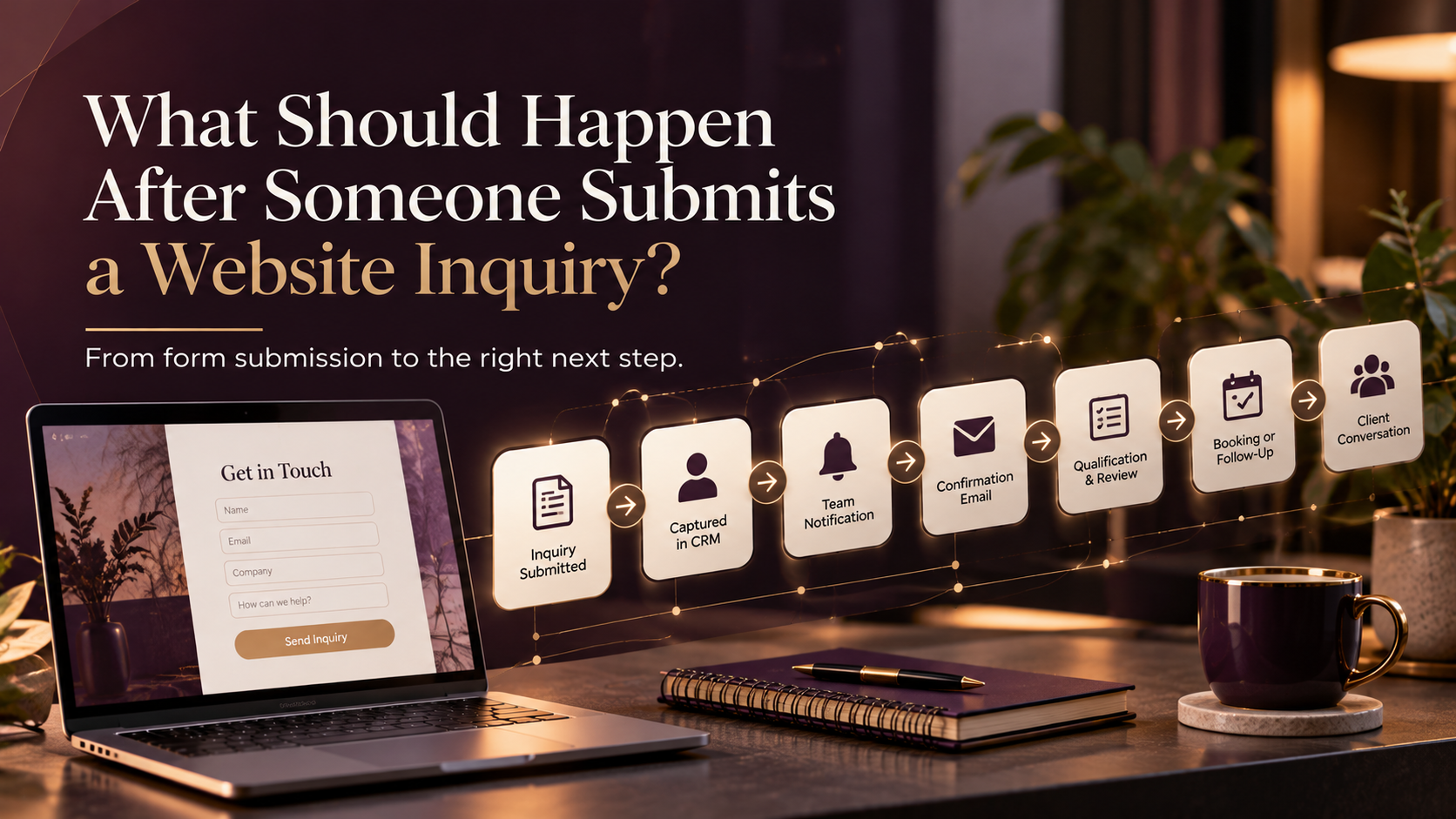
Where does their information go when they fill out a form?
What happens inside the CRM?
Who follows up?
What emails do they receive?
And what happens if they don’t respond?
These are simple questions, but they can reveal a lot about how well a marketing system is actually working.
Your Website Is Only the Starting Point
A good website should help a potential customer understand who you are, what you offer, and what they should do next.
But lead generation doesn’t stop when someone submits a contact form.
That submission needs somewhere to go.
Ideally, the lead should enter the CRM with the right information attached to it.
The business should know where the lead came from.
The right person should be notified.
The contact should receive an appropriate response.
And if follow-up is needed, there should already be a process for it.
Without that system, even a conversion-focused website can generate opportunities that eventually get lost.
This is why I don’t like looking at web design as something completely separate from CRM automation and email marketing.
The website brings the person in.
What happens next determines whether that opportunity goes anywhere.
CRM Data Affects Everything That Comes After
A CRM can hold thousands of contacts, but having the data and using the data properly are two different things.
Good CRM management makes it easier to understand who a contact is and where they are in the customer journey.
For example:
Are they a new lead?
An existing customer?
A previous customer?
A subscriber?
A partner?
A prospect currently speaking with sales?
That information becomes important when you start building marketing automation and email campaigns.
If the CRM data is messy, segmentation becomes harder.
If segmentation is inaccurate, people can receive emails that aren’t relevant to them.
And when that happens repeatedly, it affects both the customer experience and email performance.
This is why some of the most important marketing work happens behind the scenes.
Things like contact properties, lifecycle stages, lists, tags, exclusions, and workflow logic might not be visible to the customer, but they directly affect what the customer receives.
Email Marketing Is More Than Sending Campaigns
Email marketing is often reduced to newsletters, promotions, and scheduled campaigns.
Those are important, but email becomes much more useful when it connects to the rest of the customer journey.
A new lead might need a short nurture sequence.
A new customer might need onboarding emails.
An existing customer might need product updates or educational content.
An inactive contact might need a re-engagement campaign.
Someone who has already spoken with sales might not need the same marketing messages as someone who has only downloaded a resource.
This is where lifecycle marketing becomes important.
Instead of asking:
“What email should we send this week?”
The better question might be:
“What does this person need from us at this stage of their relationship with the business?”
That shift changes how you think about email strategy.
Marketing Automation Should Make the Journey Easier
I like marketing automation, but I don’t think every process needs a complicated workflow.
I’ve worked with systems where there are so many automations, lists, triggers, and conditions that it becomes difficult to understand what is happening.
Eventually, the automation that was supposed to save time becomes another thing the team has to constantly manage.
Good marketing automation should have a clear purpose.
Maybe it routes a new lead.
Maybe it sends an onboarding series.
Maybe it updates a lifecycle stage.
Maybe it alerts sales when a contact takes an important action.
Maybe it prevents someone from receiving an email that isn’t relevant to them.
The goal isn’t to automate everything.
The goal is to automate the right things.
A simple workflow that the whole team understands is usually more valuable than a complicated automation nobody wants to touch.
Email Deliverability Is Part of the System Too
Another area that can’t really be separated from email marketing is email deliverability.
You can have strong copy, good segmentation, and a well-built automation, but the email still needs to reach the inbox.
That means paying attention to things like:
SPF.
DKIM.
DMARC.
Sending reputation.
Bounce rates.
List hygiene.
Engagement.
Consent and subscription status.
These may sound more technical than creative, but they still affect marketing performance.
If deliverability starts dropping, the campaign can suffer before the customer even has a chance to read the email.
That’s why I see email deliverability as part of the overall email marketing and lifecycle strategy, not as something completely separate.
The Real Goal Is a Connected Customer Journey
When website strategy, CRM automation, email marketing, and lifecycle marketing work together, the customer experience becomes much more consistent.
Someone finds the business.
They understand the offer.
They submit an inquiry.
Their information goes into the right place.
The team knows what happened.
The contact receives the right follow-up.
Future communication is based on who they are and what they’ve already done.
Nothing about that needs to feel overly complicated.
In fact, the best systems often feel simple from the outside.
The complexity is handled behind the scenes so the experience for both the customer and the business feels more organized.
That’s the type of marketing system I enjoy working on most.
Not a website sitting by itself.
Not another email campaign disconnected from the CRM.
Not automation for the sake of automation.
But a system where the different parts actually support each other.
Because the more I work across these areas, the more I believe that the real value isn’t in any one tool.
It’s in how everything works together.